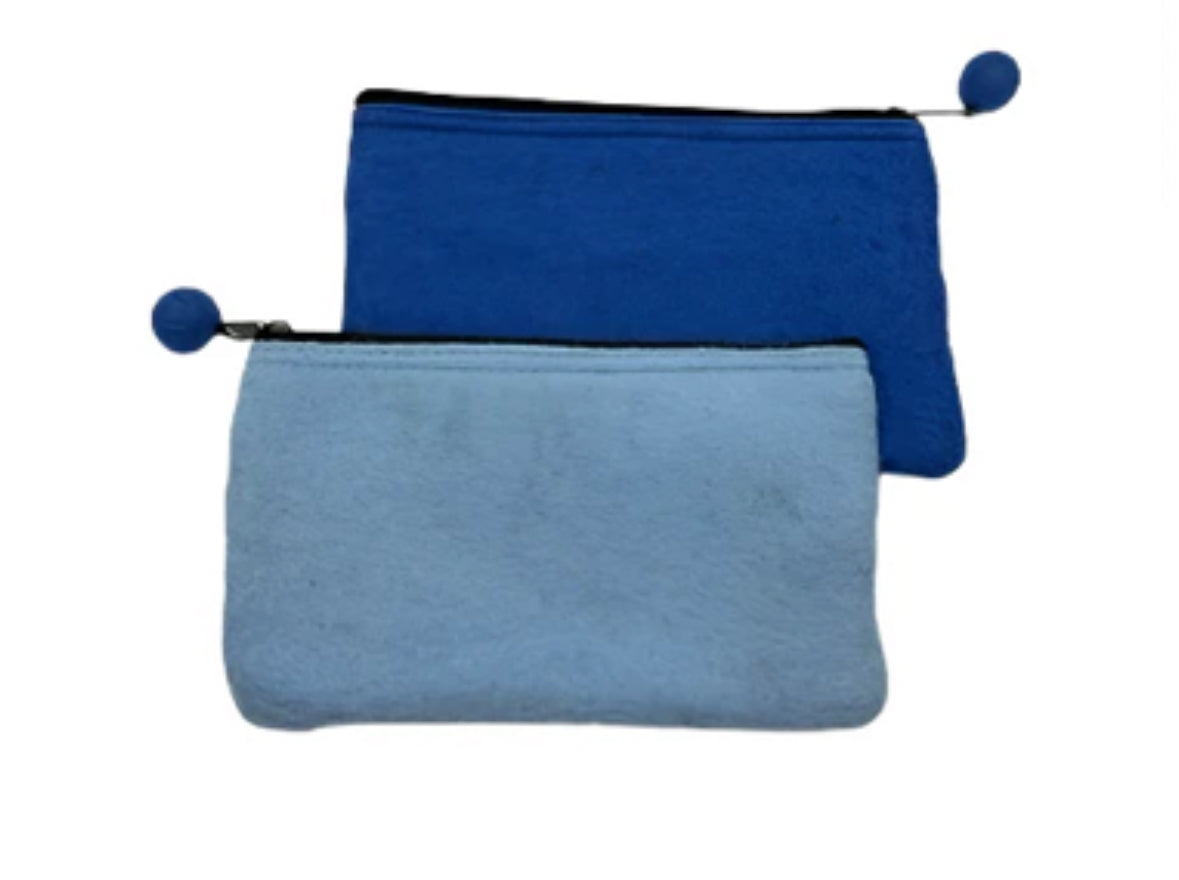


2-Tone Organizer Pouch MEDIUM - Fibres of Life
2-Tone Organizer Pouch MEDIUM - Fibres of Life
Couldn't load pickup availability
Think general organizer, notions pouch, day make-up bag, purse/bag organizer, pencil/pen/art case. Also fabulous for organizing chargers/cords/USB's etc, travel/passport case, and so much more. A contemporary 2-tone colour combo per pouch, with felt ball zipper pull.
SPECS AND DIMENSIONS:
- Size: 9” x 5”
- Felted Sheep's Wool
- Zip closure with coordinating pom pom pull tab
- Unlined inner to show off 2-tone felt.
PRODUCT ECO FACTS:
- Mulesing-free natural sheep's wool
- Use of only azo-free dyes
There is a rich community of wonderful and hard working people behind the products that you buy from Fibres of Life and we wanted to give you a glimpse into who they are.
THE DESIGN PROCESS
The inspirations for our fair trade products originate from various sources – starting with the incredible aesthetics we see in nature – the animals and plants you see in our silkscreen series. Much of our color choices derive from the exquisite natural vibrants and rooted colors you see in places of beauty – the pumpkin in Rocky Mountain lichen and the grey of the old rock it grows on. The wine of a fresh purpley willow branch paired perfectly with it’s fresh olive/chartreuse spring leaves. Since one of my passions is food, one of the first things I learn about in a new country is use of their spices and ingredients– and seeing them freshly produced and blended heaped in market stalls is unquestionably a source of our colors – chili, fresh green mint chutney.
Most important, we aim to learn more and more about the talents and inherent skills of the artisans we work with so that we can best build from their multi talents. Bringing it all together happens differently every time – sometimes it’s a pencil to paper sketching and patterning process, creating a graphic image, or collaging photos to blend unlikely combos together. The one common denominator is always loads of conversation back and forth between the fair trade associations and ourselves – and collaborating with the artisans across our languages can add challenge to the mix!
THE HANDIWORK PROCESS
This is where the fun and the chemistry really kick into gear!
It’s hard to believe how many steps go into making a beautiful handmade good. In order to ensure quality, and to support consistency when working across language and with many artisans who may not be literate, we create tools to make it easier for all of us – wooden molds for the felting of our bags, or templates with holes drilled in to identify clear button placement on our silkscreen art panel bags. Then it is the wool cleaning and carding. One of my favourite things is the hand dyeing process – rooms full of steaming hot multi colored vessels, or open air at KTS, a big open bowl nested in a platform atop an open fire for their small batch dyeing. Then there is the spinning of the wool into yarn for our knitwear. And the wet felting is a huge part of what we do – wet wet everywhere and insanely physical work to layer after layer matte that wool with water and soap into the amazing and thick textile that results. After, the cutting, the sewing on mostly treddle sewing machines, hand stitching in the linings of bags, handles and details. There is the hand weaving and hand spinning of the cotton used in our hats, hairbands and strap liners for strength. Then there are the difficult to come by traditional leather workers who use unconventional approaches to naturally tan the leather used in our tote bag handle – using only indigenous village herbs and mustard oil.
Many artisans work at the fair trade facilities, or can work from home or in their village if more appropriate for their family life and childcare, or if the traditional skill is indigenous to their community. When complete, they will bring their products, sometimes from long distances, to the facility.
THE ARTISANS WE WORK WITH
The images speak for themselves. The people that we meet and build relationships with are some of the most meaningful aspects of our work, and of what is behind the products that you buy from us.
Fair trade associations are based first, on supporting people and communities, with developing products as a means to that end. We meet and work where people work in small groups in neighbourhood houses with their children nearby or nestled in the group, family-based workshops, or in the main facilities of the fair trade associations, where parents working share the space with daycare support, a school for their kids, adult literacy classes, or a subsidized cafeteria with incredible food. The people who come to work at the associations come for varied reasons and from varied backgrounds. Some come simply seeking a positive work environment, training and mentorship, or better compensation. Others may have been marginalized in one way or another – economically, from a minority group or low caste, women leaving family violence, or youth at risk.